Anthropomorphism and the unknowability of animals
The FriendAnthropomorphism and the unknowability of animals describes a tension at the heart of the book’s accounts of animal life: people read emotions and intentions into animal behavior, yet cannot verify that their interpretations match an animal’s experience. The narrative neither simply rejects such readings nor treats them as knowledge. Human affection may depend on imagining an animal’s feelings, but the animal’s silence leaves a remainder that cannot be translated into human terms.
Signs, Tears, and the Limits of Interpretation
The discussion begins with a claim about animals and emotion: the narrator observes that people often regard humans as the only animals who both commit suicide and weep, while allowing that exhausted stags may shed tears when cornered by hounds and that crying elephants have been reported. People, she adds, readily tell stories about their cats and dogs. The distinction is not settled by these reports. Scientists, as she recounts their view, classify animal tears as signs of stress rather than the emotional tears associated with human feeling. Human emotional tears have a different chemical makeup from tears that lubricate the eye or respond to irritation, and their release may help explain why crying can leave a person feeling better. That explanation does not make animal tears legible as human grief; it marks the boundary between an observable bodily sign and the emotion people may want it to prove.
The same uncertainty applies to familiar behavior. A veterinarian once rebuked the narrator for assuming that a cat’s constant purring meant it was happy: purring, he insisted, was a noise cats made, not evidence of a particular feeling. Later, Apollo’s veterinarian cautions that people like to believe they know what happens in dogs’ heads, but dogs are more mysterious and complicated than that confidence allows. Apollo’s history is unknown, and even if people learn more about canine minds, the vet suggests, without a shared language they cannot know animals fully. The point is not that animals feel nothing; rather, outward signs do not grant humans transparent access to what they feel.
Loyalty, Grief, and Stories About Animals
Stories of animals who remain near dead or absent owners make this interpretive problem especially vivid. The narrator recalls Hachikō, whose inability to understand death led people to make a legend of him and erect a statue in his honor. Fido, a dog near Florence, reportedly waited fourteen years at the bus stop where his master had once returned from work before being killed in an air raid during the Second World War. Greyfriars Bobby, a Skye terrier, was said to have spent every night of the final fourteen years of his life at his master’s grave in Edinburgh. People have treated such conduct as exceptional loyalty rather than stupidity or mental defect. The narrator doubts a report of a Chinese dog said to have drowned itself from bereavement, yet acknowledges that these stories help explain why people attribute complex emotional lives to animals.
That willingness to read loyalty into animal behavior can expose human conduct as much as it explains dogs. A conversation about Tibetan Mastiffs bred to protect their masters turns from their impressive size and fierce reputation to the question of what such a dog might feel when its master lets it be herded onto a transport truck bound for slaughter. The narrator imagines that a mastiff might not understand betrayal and might instead worry about who will protect its master. The image is deliberately speculative: it cannot establish what the dog thinks, but it reveals how easily human accounts of loyalty can make an animal’s suffering visible while still framing that suffering through human relationships.
The narrator also recalls J. R. Ackerley’s belief that a dog’s emotional involvement with people and constant effort to please them could make its life chronically anxious and stressful. Ackerley wondered whether dogs got headaches, a question that underscores how little can be securely inferred about the private experience behind an animal’s behavior. The book extends the uncertainty from emotion to suffering itself: dogs and other animals may tolerate pain differently from humans, but their actual capacity for suffering, like the full measure of their intelligence, remains a mystery. That uncertainty does not make their pain irrelevant. It makes confident claims about its degree or meaning difficult to justify.
Apollo and the Uses of Anthropomorphism
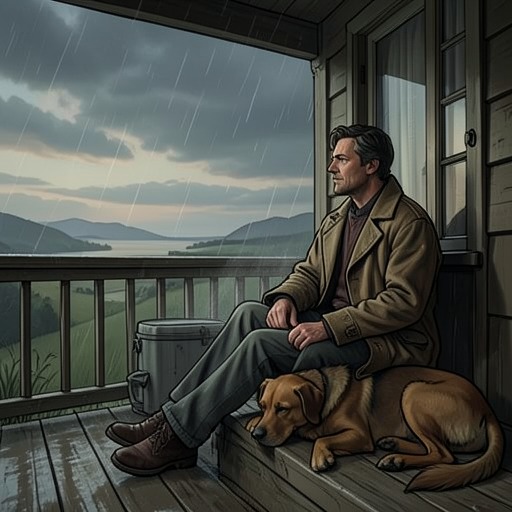
Apollo’s care brings the tension into the narrator’s daily life. When the narrator describes his anxiety attacks, the veterinarian advises against leaving him alone for too long, recommends conversation and exercise, and suggests massage if Apollo accepts it. Medication remains a last resort. The veterinarian warns that Apollo may never recover and that the reason may remain unknown. The narrator admits that the attacks are so distressing to watch that they sometimes bring her to tears; her feeling is certain, while Apollo’s precise state of mind is not. The vet’s counsel treats his distress as real without pretending to explain it completely.
The narrator’s efforts to imagine Apollo’s preferences can be knowingly fanciful. She plays him Bach, Arvo Pärt, Miles Davis, Prince, Adele, Frank Sinatra, and Mozart, but sees no sign that he listens or cares. Recalling a rabbit who once cavorted when Bach’s Sheep May Safely Graze played, she recognizes that attributing musical taste to animals can be moronically anthropomorphic, while also describing it as one form love sometimes takes. The contrast matters: the rabbit’s response seemed striking to her, but Apollo’s apparent indifference prevents the music from becoming proof of a shared aesthetic life.
Reading aloud produces a different kind of ambiguity. Apollo watches as the narrator cries, licks her face, and repeats a small dance. She wonders how puzzling human unhappiness must be to a dog, an animal bred to comfort people but unable to understand their reasons for suffering. When she reads from Rainer Maria Rilke’s Letters to a Young Poet, Apollo relaxes against her legs and feet, rests his head on his paws, and shifts his ears as her voice changes. The narrator feels soothed too. The scene offers reciprocal comfort without establishing that Apollo understands the words or the grief behind them.
A day later, Apollo gently places beside her a replacement copy of a book he had previously destroyed. The narrator considers several explanations: perhaps someone once read aloud to him, perhaps he remembers a loved person reading, or perhaps he learned that books help her when she feels low. She also imagines that his unusually capable nose could detect changes associated with stress or pleasure. These possibilities remain hypotheses rather than revelations. The image of Apollo fetching a book like a Saint Bernard carrying brandy through an avalanche of despair is irresistible, even as the narrator acknowledges that Saint Bernards never really did that. Imagination becomes a way to express attachment, not evidence that a dog has understood a human crisis in human terms.
Silence, Projection, and Shared Uncertainty
The book’s broader reflections on interpreting others reinforce this caution. The narrator recalls that her deceased friend had predicted a wave of suicides among writers, then felt embarrassed about how the remark might sound. In discussing writing and readers, the friend described being praised or condemned for meanings readers had attributed to books that he had neither intended nor expressed. These episodes concern people, not animals, but they sharpen the book’s concern with the distance between what someone does or says and what another person believes it means. If even human speech can be seriously misread, animal behavior cannot be treated as a transparent message.
The narrator likewise recognizes the speculative character of her attempt to imagine why her friend died. She entertains the possibility that he convinced himself the people he left behind would grieve and eventually carry on, perhaps because that belief made his own suffering easier to bear. She accepts the possibility without claiming to know his thoughts. This restraint parallels her treatment of Apollo: care does not require certainty about another being’s interior life, but the wish to explain can easily become a story mistaken for fact.
Anthropomorphism therefore remains ethically double-edged. It can turn animals into mirrors for human feeling, as when loyalty stories make a dog’s life intelligible through devotion to a master. It can also keep human attention on animal distress when strict skepticism might dismiss visible signs as meaningless. The narrator repeatedly imagines what animals might feel, then marks the limits of those imaginings. Apollo’s comfort is meaningful even if its meaning cannot be fully known; the relationship does not erase the difference between human and animal experience. Its central insight is not that people can solve that difference, but that affection and uncertainty must coexist.